


The Ultimate Guide to Property Documentation in Nigeria

Buying property in Nigeria is a major financial decision. Whether you are purchasing land, a house, an apartment, or commercial property, the excitement of finding the right property can sometimes make buyers overlook one of the most important parts of the transaction: documentation.
A property may be in a desirable location, have a beautiful building, or come at an attractive price, but if the ownership documents are incomplete, defective, or cannot be properly verified, the investment can become a serious problem.
Property documentation is what helps establish who owns a property, the rights attached to it, how it was transferred, and whether there are restrictions or disputes affecting it.
This guide explains the major property documents you are likely to encounter in Nigeria, what they mean, what to check before buying, and why proper verification should never be skipped.
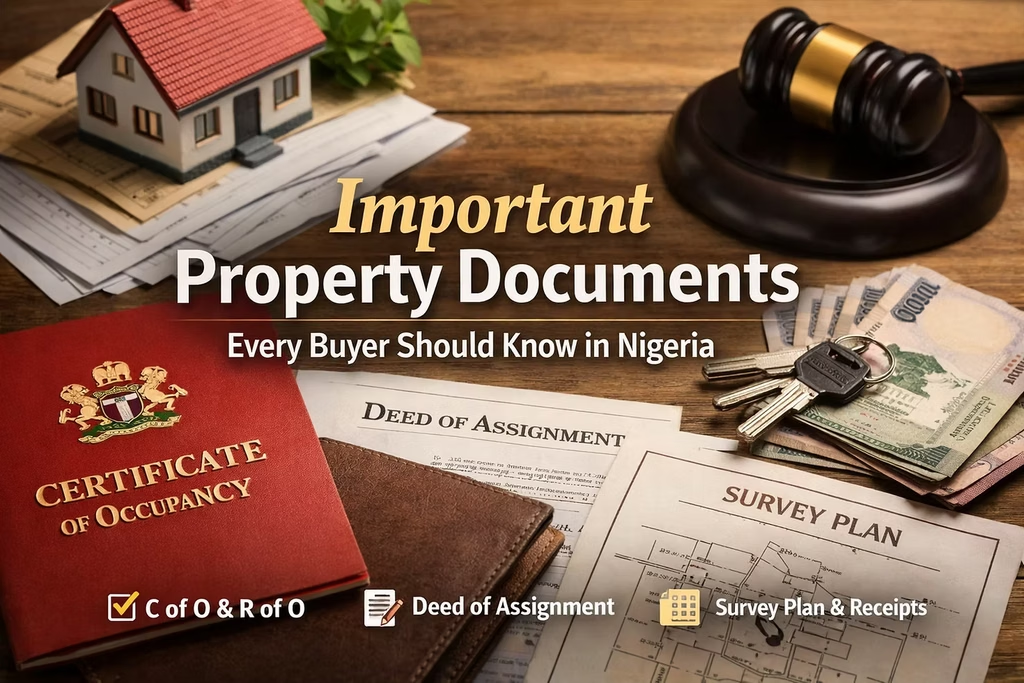
Why Property Documentation Matters
Property documentation is more than paperwork exchanged between a buyer and seller. It provides evidence of ownership and helps establish the legal history of a property.
Proper documentation can help a buyer:
- Confirm that the seller has the right to sell the property.
- Establish the history of ownership.
- Identify existing claims or interests in the property.
- Determine whether the property has been properly transferred.
- Confirm whether the land is affected by government acquisition or planning restrictions.
- Make future resale or transfer easier.
- Reduce the risk of fraud, double allocation, boundary disputes, and other complications.
One of the biggest mistakes a buyer can make is assuming that possession of a document automatically means the property is safe to buy. A document must be verified, and the information contained in it should correspond with the actual property and the relevant government records.
The Major Property Documents You Should Know
Different properties may have different documents depending on their location, ownership history, and how they were acquired. You should therefore not expect every property in Nigeria to have exactly the same set of documents.
Here are some of the most important ones.
1. Certificate of Occupancy (C of O)
The Certificate of Occupancy, commonly called a C of O, is one of the most recognized land title documents in Nigeria. It is issued by the relevant government authority and provides evidence of a right of occupancy over a particular parcel of land for a specified period and subject to stated conditions.
However, having a C of O does not mean a buyer should stop investigating the property. The certificate itself should be verified, including the identity of the holder, property details, plot information and whether there are any issues affecting the title.
A buyer should also understand whether the C of O being presented relates directly to the property being purchased or whether there have been subsequent transfers.
2. Deed of Assignment
A Deed of Assignment is a legal document used to transfer an interest in property from one party, known as the assignor, to another party, known as the assignee. For example, if someone owns a property and sells it to you, the Deed of Assignment documents the transfer of the seller’s interest to you.
It is particularly important because the transaction should not simply be based on a receipt or informal agreement. The deed provides a formal record of the transfer.
Before signing one, the buyer should ensure that:
- The parties are correctly identified.
- The property description is accurate.
- The seller’s title is properly stated.
- The consideration or purchase price is correctly reflected where appropriate.
- The boundaries and relevant property details are accurate.
- The document is properly executed.
- The necessary consent or registration requirements are addressed.
3. Survey Plan
A Survey Plan shows the location, boundaries, dimensions and other relevant details of a parcel of land.
It is particularly important when purchasing land because it helps establish exactly what parcel is being discussed.
A survey can also help identify whether the land falls within an acquisition, committed area, road alignment, or other planning restriction, depending on the information available from the relevant authority. This is why buyers should not rely solely on what an agent or seller points out on the ground. The land you inspect physically should correspond with the land described in the survey documentation.
4. Governor’s Consent
Under Nigeria’s land laws, certain transactions involving an existing right of occupancy require the appropriate consent of the Governor.
Governor’s Consent is therefore an important part of many property transactions, particularly where an existing interest in land is being transferred.
The specific requirements and process can vary by state, so buyers should obtain professional advice on the applicable procedure in the state where the property is located.
A common mistake is to treat Governor’s Consent as simply another document to collect without understanding the transaction and title history behind it.
5. Deed of Gift
Not every property changes hands through a sale.
A property may be transferred as a gift from one person to another. In such circumstances, a Deed of Gift can be used to formally document the transfer.
The fact that no money was exchanged does not mean documentation is unnecessary. The transfer still needs to be properly documented and handled in accordance with applicable legal requirements.
6. Power of Attorney
A Power of Attorney allows one person to authorise another person to act on their behalf within the scope of the authority granted.
In property transactions, this can become relevant where an owner cannot personally handle certain aspects of a transaction.
However, a Power of Attorney is not automatically proof that the person granting it owns the property.
A buyer should therefore investigate the underlying title and confirm that the person granting the authority has the legal capacity to do so.
7. Purchase Receipt or Evidence of Payment
Receipts and other evidence of payment can demonstrate that money was paid for a property.
They are useful records, but a receipt alone should not be treated as proof of good title.
A buyer should ensure that the payment is connected to a properly documented transaction and that the person receiving the money has the authority to sell or transfer the property.
8. Allocation Letter
For some properties, particularly those allocated by government authorities or certain estates and schemes, an Allocation Letter may form part of the documentation.
It may contain details about the allocation of the property, the allottee and the relevant plot or property information.
However, buyers should still verify the allocation and determine whether additional steps, documentation or title perfection are required.
9. Deed of Assent
A Deed of Assent can be relevant where property belonging to a deceased person is transferred to a beneficiary or personal representative as part of the administration of an estate.
When purchasing property from an estate, buyers need to pay particular attention to the seller’s authority to sell and the documents establishing the estate’s right to deal with the property.
This is an area where professional legal assistance is especially important.
Gazette, Excision and Other Land Documents
Property buyers in Nigeria will encounter terms such as Gazette, Excision, Allocation Papers, Registered Deed, and Governor’s Consent.
These terms should not simply be treated as interchangeable.
For example, an excision relates to the process by which land is formally excised from an area claimed by the government and recognized as belonging to a particular community or group, subject to the relevant legal and administrative framework.
A Gazette may contain an official publication relating to government decisions, land matters, or other legal and administrative information.
The important point is that buyers should not purchase land simply because an agent says it is “gazetted” or “excised.”
The actual document, its details, the specific location and the relevant government records must be examined and verified.
The Property Verification Process
Having documents is only one part of the process. Verification is what gives those documents practical value.
Before paying a substantial amount for a property, buyers should carry out appropriate searches with the relevant authorities.
Depending on the property and location, verification may involve checking:
- The land registry.
- Survey records.
- Planning authorities.
- Government acquisition records.
- The identity and authority of the seller.
- Existing mortgages, charges or encumbrances.
- Litigation or disputes affecting the property.
- Estate or developer records where applicable.
The exact process differs between states, so the relevant government institutions and procedures should be confirmed for the location of the property.
Physical Inspection Is Still Necessary
Documents cannot tell you everything.
A buyer should physically inspect the property and surrounding area and compare what is on the ground with the information contained in the documents.
For land, this can include checking boundaries, access roads, neighboring properties and the physical location.
For developed property, the buyer should also confirm that the building corresponds with the description and investigate relevant approvals and planning requirements.
Where necessary, a qualified surveyor, lawyer, engineer or other appropriate professional should be involved.
Beware of Buying Property Through the Wrong Person
One of the biggest risks in property transactions is dealing with someone who does not actually have the authority to sell the property.
A person may present themselves as:
- The owner.
- An agent.
- A family representative.
- An executor or administrator.
- A representative of a company.
- A community representative.
- An attorney.
But their claim should be independently verified.
If the property belongs to a company, for example, the buyer should confirm that the company is the actual owner and that the person executing the transaction has the authority to act for the company.
Similarly, property belonging to a deceased person’s estate requires careful examination of the relevant estate documents and the authority of the person selling it.
Common Property Documentation Mistakes Buyers Make
Relying on the Seller’s Word
Trust is useful, but property transactions require evidence. Even if the seller appears genuine, independent verification should still be carried out.
Assuming a C of O Means Everything Is Fine
A C of O is an important title document, but buyers should still investigate the property’s history and confirm that the document is genuine and applicable to the property being purchased.
Paying Before Conducting Due Diligence
A buyer who pays a large deposit before properly checking the property can find themselves under pressure after discovering a problem.
Due diligence should come before substantial financial commitment, not after.
Ignoring the Survey
A buyer may be shown a beautiful piece of land only to discover that the survey does not correspond with the land inspected. Always establish exactly what you are buying.
Treating Receipts as Title
A receipt proves that money was paid. It does not, by itself, establish that the seller had good title or the legal right to transfer the property.
Using Unqualified Professionals
Property transactions involve legal, surveying, planning and sometimes technical issues.
Using the cheapest available service without considering competence and experience can create problems that are far more expensive to fix later.
A Practical Property Documentation Checklist
Before completing a property purchase, consider confirming the following:
Ownership: Who legally owns the property?
Identity: Does the seller’s identity correspond with the ownership documents?
Title: What document establishes the seller’s interest in the property?
Survey: Does the survey correspond with the actual property?
Government records: Has the relevant title been independently verified?
Encumbrances: Is the property subject to a mortgage, charge, restriction or other interest?
Disputes: Is there any known litigation or competing claim?
Planning: Does the property’s use and development comply with applicable planning requirements?
Transfer: What document will be used to transfer the interest to the buyer?
Perfection: What steps are required after purchase to perfect or register the buyer’s interest?
Professionalreview: Has a qualified property lawyer and, where necessary, a registered surveyor or other relevant professional reviewed the transaction?
What Happens After Buying the Property?
Property documentation does not necessarily end when the purchase agreement is signed.
Depending on the nature of the transaction and the location of the property, the buyer may need to take additional steps to perfect, register or otherwise formalize their interest.
These processes can involve documentation, government fees, taxes, consent requirements and registration.
This is one reason buyers should ask their lawyer before completing the transaction what post-purchase steps will be required and what they are expected to cost.
Conclusion
A good property is not defined only by its location, design or price. The strength and clarity of its title are equally important.
Property documentation helps you understand what you are buying, who has the right to sell it, and what legal interests may affect your ownership.Take the time to examine the documents, verify the information with the relevant authorities, inspect the property and seek professional advice where necessary.
The goal is not simply to buy a property. It is to buy a property whose ownership can be properly established, transferred and protected.

